Have you ever wondered how businesses formally request payments from customers and keep track of their sales? Whether a company sells products, provides services, or manages large transactions, invoices play an essential role in everyday financial operations.
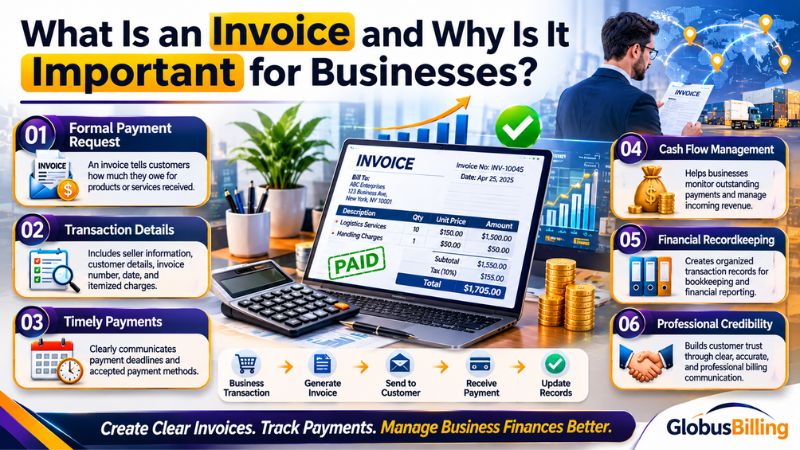
[***An invoice is***](https://globusbilling.com/blog/invoice-complete-guide-beginners-what-is-an-invoice-2027/) a commercial document that a seller sends to a buyer requesting payment for goods or services provided. It typically includes the invoice number, seller and buyer details, description of products or services, quantities, prices, applicable taxes, total amount due, and payment terms.
Invoices help businesses maintain financial records, track payments, manage cash flow, and establish clear communication with customers. Understanding their purpose and importance can help businesses manage transactions more accurately and professionally.
What Is an Invoice?
An invoice is a formal payment request issued by a business after providing goods or services to a customer. It explains what the customer purchased, how much they owe, and when the payment is expected.
Unlike a receipt, which confirms that payment has been received, an invoice generally requests payment.
For example, when a marketing agency completes a project for a client, it sends an invoice detailing the services delivered, agreed charges, taxes, and payment deadline.
Invoices serve as important financial records for both buyers and sellers.
What Information Should an Invoice Include?
A properly prepared invoice should contain all the essential information required to understand and process a transaction.
Here are the key elements:
1. Invoice Number
A unique identification number helps businesses track individual invoices and avoid duplicate records.
2. Business and Customer Details
Include the seller's business name, address, contact information, and the customer's relevant details.
3. Invoice Date and Due Date
The invoice date indicates when the document was issued, while the due date specifies when payment should be completed.
4. Description of Products or Services
Clearly mention the goods or services provided, including quantities, unit prices, and applicable charges.
5. Taxes and Total Amount
Display applicable taxes, discounts, additional charges, and the final amount payable.
6. Payment Terms and Methods
Explain accepted payment methods, payment deadlines, bank details where appropriate, and any applicable late-payment conditions.
Including these details makes invoices easier to understand, verify, and process.
Why Is an Invoice Important for Businesses?
Invoices are more than payment requests. They support several important business and financial activities.
1. Ensures Timely Payments
Invoices communicate how much customers owe and when payment is expected. Clear payment terms help reduce confusion and encourage customers to pay on time.
2. Improves Cash Flow Management
Businesses need consistent cash flow to manage salaries, operational expenses, inventory, and other financial responsibilities.
By tracking issued, paid, and overdue invoices, companies can understand incoming payments and plan their finances more effectively.
3. Maintains Accurate Financial Records
Invoices provide transaction details that businesses can use for bookkeeping, accounting, financial reporting, and tax preparation.
Organized invoice records also make it easier to review previous transactions and resolve payment-related disputes.
4. Supports Tax Compliance
Invoices help document sales, purchases, and applicable taxes. Depending on local regulations and transaction requirements, businesses may need to issue specific types of tax invoices and maintain supporting records.
Accurate documentation makes tax reporting and financial verification easier.
5. Builds Professional Credibility
A clear, consistent invoice creates a professional impression. It demonstrates that a business follows organized billing practices and communicates payment expectations transparently.
6. Reduces Payment Disputes
Detailed descriptions, agreed prices, tax information, and payment terms help customers understand what they are being charged for.
This reduces misunderstandings and provides a useful reference if a billing disagreement occurs.
What Are the Different Types of Invoices?
Businesses use different invoice formats depending on their transactions, industries, and billing arrangements.
Common types include:
Standard Invoice: Used to request payment for products or services provided.
Proforma Invoice: Provides an estimated or preliminary breakdown of expected charges before a transaction is finalized.
Tax Invoice: Includes applicable tax details and information required under relevant tax regulations.
Recurring Invoice: Sent regularly for subscriptions, retainers, or ongoing services.
Credit Invoice: Issued to reduce the amount a customer owes, often because of returns, refunds, or billing adjustments.
Debit Invoice: Used to communicate an additional amount payable in certain billing situations.
Commercial Invoice: Commonly used in international trade to describe exported goods and their declared value.
Choosing the correct invoice type helps businesses maintain clear and appropriate transaction records.
How Does the Invoice Process Work?
Most businesses follow a straightforward invoicing process:
Complete the transaction: Deliver the agreed products or services.
Prepare the invoice: Add customer details, descriptions, prices, taxes, and payment terms.
Send the invoice: Share it with the customer through email, accounting software, or another suitable channel.
Track payment status: Monitor whether the invoice is pending, paid, or overdue.
Record the payment: Update accounting records once payment is received.
Store the document: Maintain invoice records for future reference and compliance requirements.
Following a consistent process helps businesses manage billing activities more efficiently.
### How Can Businesses Manage Invoices More Efficiently?
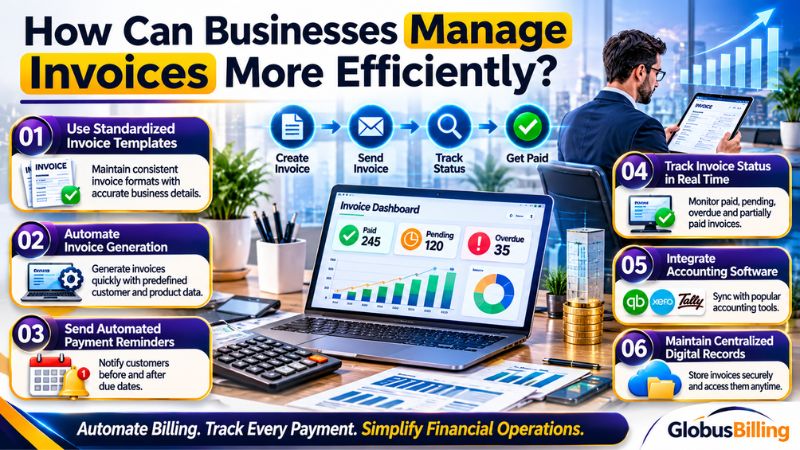
Manual invoicing can become difficult when businesses handle hundreds or thousands of transactions. Digital invoicing and accounting tools help simplify these activities.
Businesses can improve invoice management by:
Using standardized invoice templates.
Assigning unique invoice numbers.
Automating recurring invoices and payment reminders.
Tracking outstanding payments.
Maintaining centralized digital records.
Integrating invoicing tools with accounting software.
Reviewing invoice data regularly to identify errors.
Automation can reduce repetitive administrative work and give businesses better visibility into their financial operations.
Conclusion
Invoices are essential for maintaining transparent and organized business transactions. They help companies request payments, monitor cash flow, maintain financial records, support tax documentation, and build stronger customer relationships.
Understanding [what is an invoice](https://globusbilling.com/blog/invoice-complete-guide-beginners-what-is-an-invoice-2027/) and how it works allows businesses to establish better billing practices and avoid unnecessary payment delays. By adopting digital invoicing and automation tools, businesses can simplify financial administration, improve accuracy, and focus more on growth.
You can also watch:
https://www.youtube.com/channel/UCQL7v62eFRJ7RGkBbBfidLw
Frequently Asked Questions (FAQs)
1. What is the main purpose of an invoice?
The main purpose is to formally request payment from a customer for products or services provided while documenting the transaction.
2. Is an invoice the same as a receipt?
No. An invoice requests payment, while a receipt confirms that payment has been made.
3. When should a business send an invoice?
Businesses generally send invoices after delivering products or services, according to their agreed billing arrangements. Some transactions may require advance or milestone invoicing.
4. Can an invoice be used as proof of payment?
An invoice alone does not confirm payment. A payment receipt or updated invoice marked as paid can provide evidence that the amount has been settled.
5. What happens if a customer does not pay an invoice?
The business can send payment reminders, contact the customer, review the agreed payment terms, and follow appropriate collection procedures.
6. Can small businesses use digital invoices?
Yes. Small businesses can use digital invoicing tools to create professional invoices, track payments, send reminders, and maintain organized financial records.